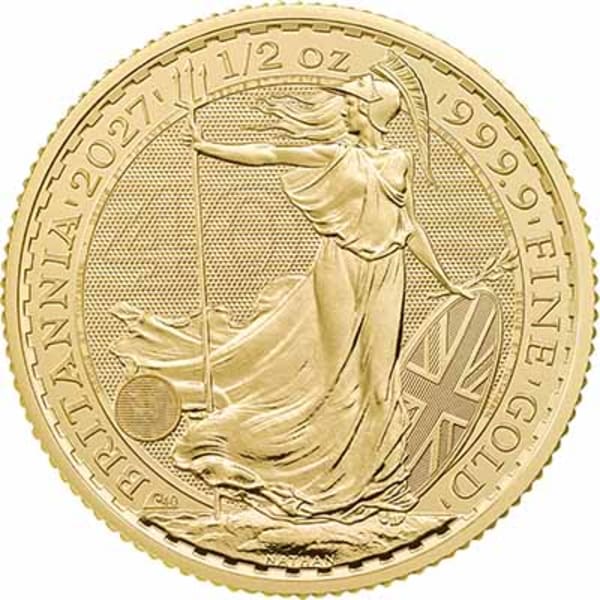
2027 1/2oz Gold Britannia Bullion Coin
Out of Stock

Out of Stock
Out of Stock
Out of Stock
Gold has been a trusted store of wealth for thousands of years, valued not only for its beauty but also for its rarity, durability, and universal acceptance. Today, gold bullion remains one of the most popular and accessible ways to preserve and grow wealth, with coins and bars offering investors flexibility in format, size, and price point.
Gold's intrinsic value and historical stability make it a core component of many investment strategies, whether for long-term holding or as a hedge against market volatility.
Gold Traders offers a comprehensive selection of bullion coins and bars, from fractional sizes suitable for gradual accumulation to substantial weights designed for larger portfolio positions. We stock brand new and carefully authenticated pre-owned gold, giving customers greater choice and often improved value.
All our gold bullion is sourced through trusted supply chains, ensuring every piece meets strict standards for purity and presentation.
A 1/2 ounce coin contains half a troy ounce of precious metal. That's about 15.55g of fine gold, in a coin a little smaller than a £2 piece.
Half-ounce coins sit between the full ounce and the smaller fractional sizes. They give you a good amount of gold in one coin, without the larger outlay of a 1oz coin.
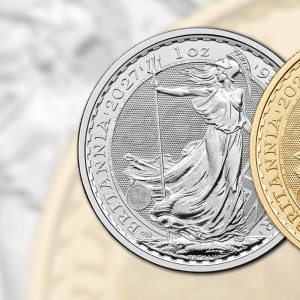
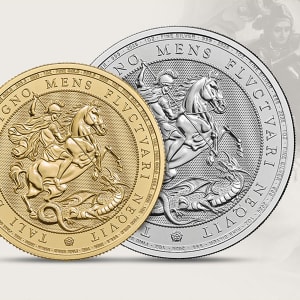
The Royal Mint has made a half-ounce Gold Britannia since the series began in 1987. Today's coins are struck in 999.9 fine gold (24 carat) and measure 27.00mm across.
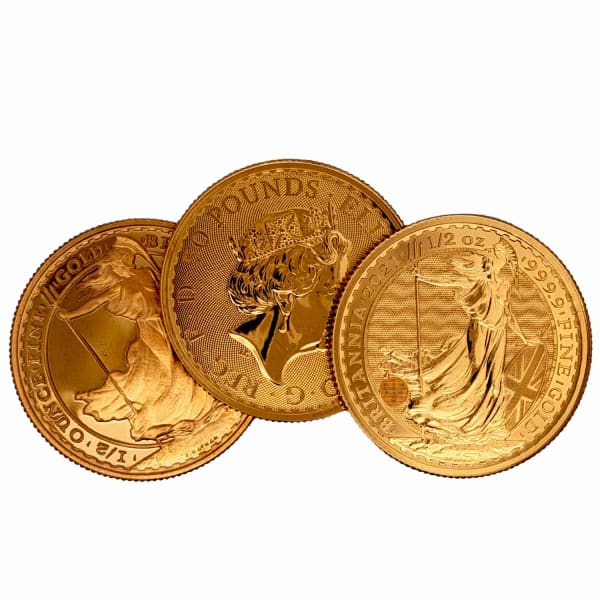
Older half ounces made between 1987 and 2012 are 22 carat. They hold the same amount of pure gold but weigh a little more. For 2027, the coin carries a '40' privy mark celebrating 40 years of the Gold Britannia.
A half ounce is a practical middle ground. It costs less than a full ounce, but the premium over the gold price is usually lower than on quarter-ounce and tenth-ounce coins.
It's also flexible. If you hold several half ounces, you can sell part of your gold without parting with a whole ounce at once.
Gold coins that qualify as investment gold, such as Gold Britannias, are free from VAT in the UK.
Because Britannias are UK legal tender, any gain when you sell them is also free from Capital Gains Tax for UK residents. Half-ounce coins from other countries don't share this exemption.
We buy half-ounce coins in person at our Royal Wootton Bassett and Bodmin branches, and by post. See what we pay for a 1/2oz Gold Britannia, or browse our full Britannia range.
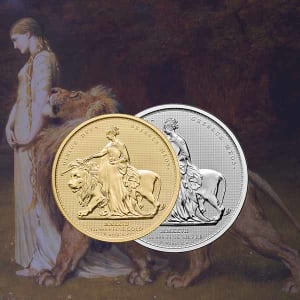
Britannia coins are The Royal Mint's own gold and silver bullion coins. Gold Britannias were first made in 1987, and silver Britannias followed in 1997. The 2027 coins celebrate 40 years of the gold coin and 30 years of the silver coin.
Every coin shows Britannia, the figure who has stood for Britain on coins since Roman times. Today's coins are struck in 999.9 fine gold and 999 fine silver, and they're UK legal tender.
You'll find the Britannia coins and bars we currently stock below.
We've compiled a list of our most frequently asked questions. If there's something we haven't covered, please call us & we'll be happy to help. Read all FAQs.
We have a simple gold hallmark wizard that will help you identify the marks on your gold to determine its carat and age.
Top tip: Unless your eyesight is super sharp, you'll need a magnification tool to view the marks on your gold. Modern smartphone cameras can often assist with this.
Yes. We buy half-ounce coins in person at our Royal Wootton Bassett and Bodmin branches, and by post. That includes older 22 carat Britannias.
It has a face value of £50. The gold in the coin is worth far more than its face value.
Yes, for UK residents. Britannias are UK legal tender, and gains on UK legal tender coins are exempt from Capital Gains Tax. Half-ounce coins from other countries aren't exempt.
Yes. Gold Britannias qualify as investment gold, so there's no VAT to pay on them in the UK.
Usually, yes. The premium over the gold price tends to be lower on bigger coins, because making costs are spread over more metal. So a single half ounce normally costs less than two quarter ounces.
A 1/2oz coin contains half a troy ounce, which is about 15.55g of fine gold. The coin itself weighs a little more. For example, the 2027 1/2oz Gold Britannia weighs 15.60g.
It celebrates 30 years since the Silver Britannia was launched in 1997. The '30' wave privy mark and matching background texture only appear on 2027 silver Britannias.
The '40' wave privy mark celebrates 40 years since the Gold Britannia was launched in 1987. It only appears on 2027 gold coins, along with a background texture that shows the number 40.
We're an official partner of The Royal Mint, and all our new UK bullion stock is sourced directly from them in Llantrisant, South Wales. This ensures authenticity, consistency, and the reassurance of official UK bullion.
Fractional coins like the ¼oz Britannia offer a more accessible entry point into silver investing. They're ideal for cost averaging or for those who prefer to hold divisible, tradable units of silver rather than full one-ounce coins.
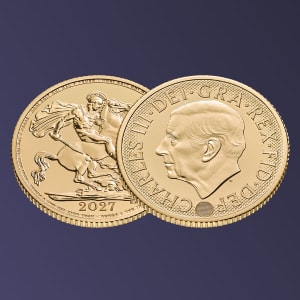
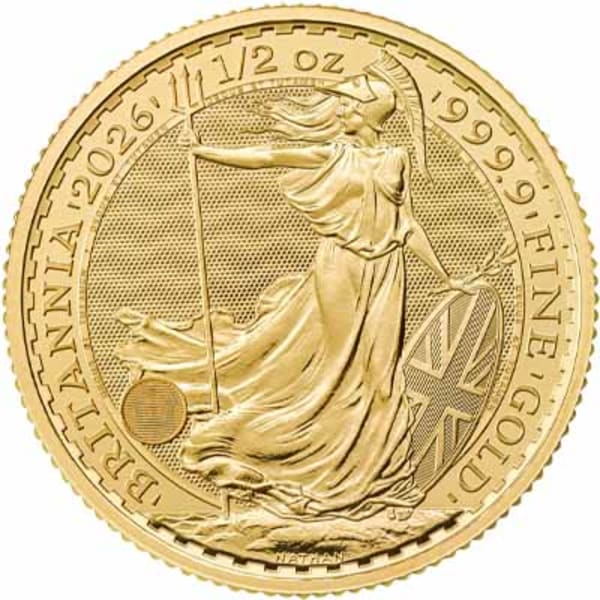
The reverse, depicting the standing figure of Britannia, was created by renowned sculptor Philip Nathan. The obverse features the effigy of King Charles III, designed by Martin Jennings.
Yes, if the coin is dated 2021 or later. Earlier 24ct issues (2013-2020) do not include these features. Unfortunately, we don't offer a selection service from our pre-owned stock; however, all coins sold have been thoroughly checked and authenticated as genuine.
22ct Britannias (1987-2012) contain 1oz of gold but weigh 34.05g due to their alloy content. 24ct Britannias (2013-present) are struck in .9999 fine gold, weighing 31.21g in total. Both contain exactly 1 troy ounce of pure gold.
Britannias are highly liquid, instantly recognisable, and carry UK tax advantages (VAT-free and CGT-exempt). They combine historic design with advanced security features, making them a practical and secure choice for investors.
As gold bullion is exempt from UK VAT, there are no applicable taxes at the point of purchase.
However, investors should note that gold bars are liable for Capital Gains Tax at the point of sale, if you exceed your capital gains threshold within your tax year and you make a profit on the sale.