
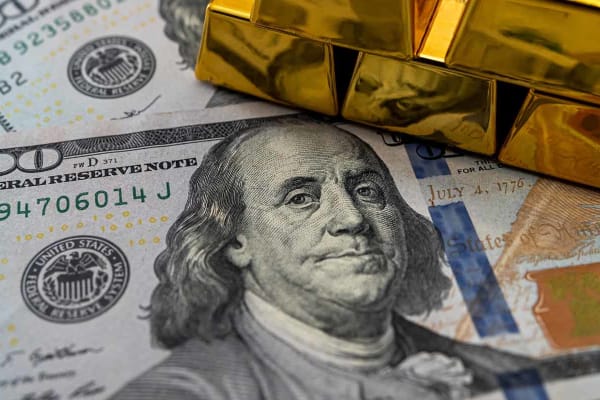
Does Gold Back the American Dollar?
When the Coinage Act was passed in 1792, the American Dollar was backed by 24.75 grains of gold.

Actually, gold is not the true name of this rare yellow metal although it is the commonly accepted name in use today. Almost every culture has had some experience with gold and there have been many names for this precious metal. The term "Gold" as we know it today, actually derives from Old English and Germanic origins.
The German Gothic language expressed gold with the word gulþa which later evolved into geolu in the Old English language. Geolu is translated to mean "yellow", thus naming the metal for its most dominant characteristic: its golden yellow colour. In the twelfth century, Middle English brought another evolution to the word and our modern word, gold, came into existence.
The chemical symbol for Gold on the periodic table of elements is AU. This symbol is a tribute to the Latin word aurum, loosely translated as "glowing dawn", which was used to describe gold in Ancient Rome. The Ancient Romans were not the first civilisation to encounter gold. Still, they did invent improvements in how gold was mined and extracted, thus increasing the availability of gold throughout their empire. Many of these improved methods invented by the Ancient Romans have stood the test of time and are still used by gold miners today.
When the Coinage Act was passed in 1792, the American Dollar was backed by 24.75 grains of gold.

When you think of Olympic gold medals, what comes to mind? For many, it's the glimmering symbol of victory, prestige, and relentless hard work. But here’s a surprising twist: these celebrated awards aren't actually made of solid gold! Instead, they primarily consist of silver with just a thin layer of gold plating.
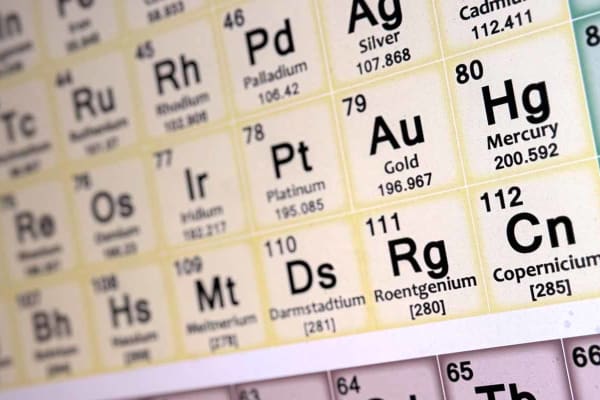
Of the ninety-two elements found in the Earth, forty are used in our daily lives.