
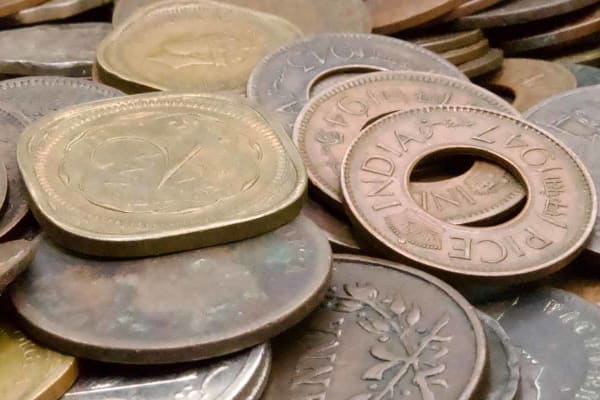
Coins of India
Historians believe that coins were introduced in India sometime around the 5th and 6th centuries BC to facilitate trade.

At the time of the American Dollar's inception and approval by the Congress in 1786, it was merely a symbolic act and no actual coins or bills were created until the signing of the Coinage Act of 1792, when the dollar was produced in coins rather than the paper money that we know today. At that time, the American Dollar coin represented 24.75 grains of gold and the dollar coins were composed of silver.
In 1900, the United States government moved their money to the Gold Standard, which meant that all money being used in the country was backed by a certain amount of gold that was held in the Federal Repository. At that time, the value of one dollar was set as equal and redeemable to the amount of 23.22 grains of gold.
In the years that followed, the Gold Standard was suspended and reinstated several times until 1963, when the United States followed the example of most other nations of the world in making their money a fiat currency, one that is not directly backed by any physical amount of gold or other precious metals.
Historians believe that coins were introduced in India sometime around the 5th and 6th centuries BC to facilitate trade.
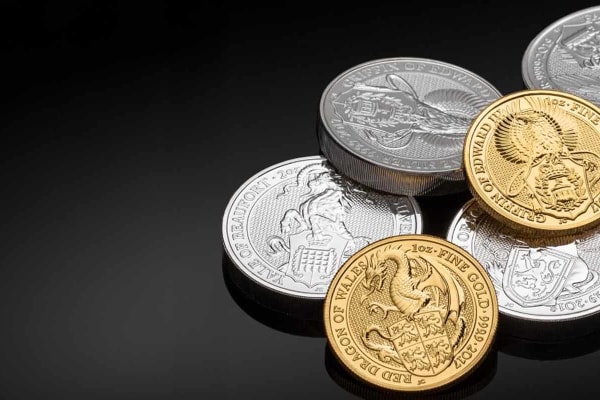
A detailed, UK-focused guide exploring the strengths, risks, and roles of gold and silver in investment portfolios. Learn how each metal performs in times of economic uncertainty, how VAT affects your choices, and what historical and industrial trends mean for future value.

An average human body (weighing 70kg), contains a small amount of pure gold. Find out how much!