
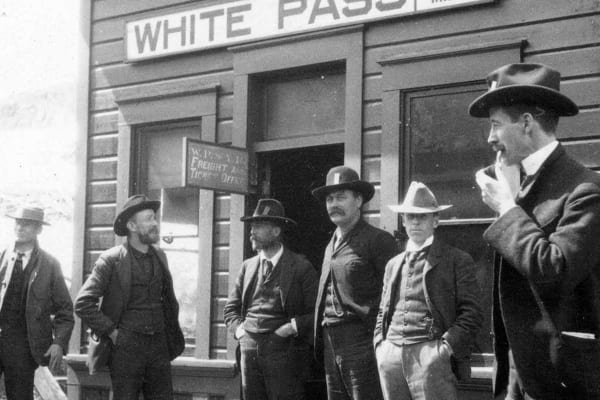
The Klondike Gold Rush
Uncovering the Journey to Riches and Hardship in the Yukon

At the time of the American Dollar's inception and approval by the Congress in 1786, it was merely a symbolic act and no actual coins or bills were created until the signing of the Coinage Act of 1792, when the dollar was produced in coins rather than the paper money that we know today. At that time, the American Dollar coin represented 24.75 grains of gold and the dollar coins were composed of silver.
In 1900, the United States government moved their money to the Gold Standard, which meant that all money being used in the country was backed by a certain amount of gold that was held in the Federal Repository. At that time, the value of one dollar was set as equal and redeemable to the amount of 23.22 grains of gold.
In the years that followed, the Gold Standard was suspended and reinstated several times until 1963, when the United States followed the example of most other nations of the world in making their money a fiat currency, one that is not directly backed by any physical amount of gold or other precious metals.
Uncovering the Journey to Riches and Hardship in the Yukon

When you think of Olympic gold medals, what comes to mind? For many, it's the glimmering symbol of victory, prestige, and relentless hard work. But here’s a surprising twist: these celebrated awards aren't actually made of solid gold! Instead, they primarily consist of silver with just a thin layer of gold plating.

The simple answer is 'no', gold is not magnetic. However, without further explanation, items of gold jewellery will likely get incorrectly rejected, so let's delve a little deeper!