

How Many Grams in an Ounce of Gold?
Precious metals, including gold are measured in Troy Ounces. There are 31.103 grams in a Troy Ounce of gold.
When it comes to metals, gold often stands out - not just for its beauty but also for its incredible properties. You might think of it as a shiny piece of jewellery, but gold has a lot more going on beneath the surface, especially when we talk about temperatures.
Gold doesn't just melt - it boils too. Understanding the boiling point of gold helps explain why it's so useful in electronics, aerospace, and medicine. In this article, we'll look at what makes gold such a remarkable metal.
The boiling point of gold is around 2,856 degrees Celsius (5,173 degrees Fahrenheit). That makes it one of the highest boiling points of any metal. You need an extraordinary amount of heat just to turn gold into a gas.
Gold has a boiling point of 2,856 degrees Celsius (5,173 degrees Fahrenheit). That places it among the most heat-resistant metals in existence.
Most people are familiar with gold's melting point - 1,064 degrees Celsius (1,947 degrees Fahrenheit). That's already very high. But turning liquid gold into a gas requires nearly three times that temperature.
This means that vaporising gold is no simple task. It requires specialist equipment and very precise conditions. In industries like electronics and aerospace, even the smallest impurity can cause serious problems - so that precision matters a great deal.
The World Gold Council reports that around 10% of all high-tech gadgets contain gold. That's because gold conducts electricity well and doesn't corrode or tarnish over time.
In semiconductor manufacturing, gold is used to create extremely thin coatings on electronic components and medical devices. The gold is vaporised and then deposited in fine layers. This process relies entirely on understanding and controlling gold's boiling point.
These coatings improve performance without adding weight - which is exactly what precision industries need.
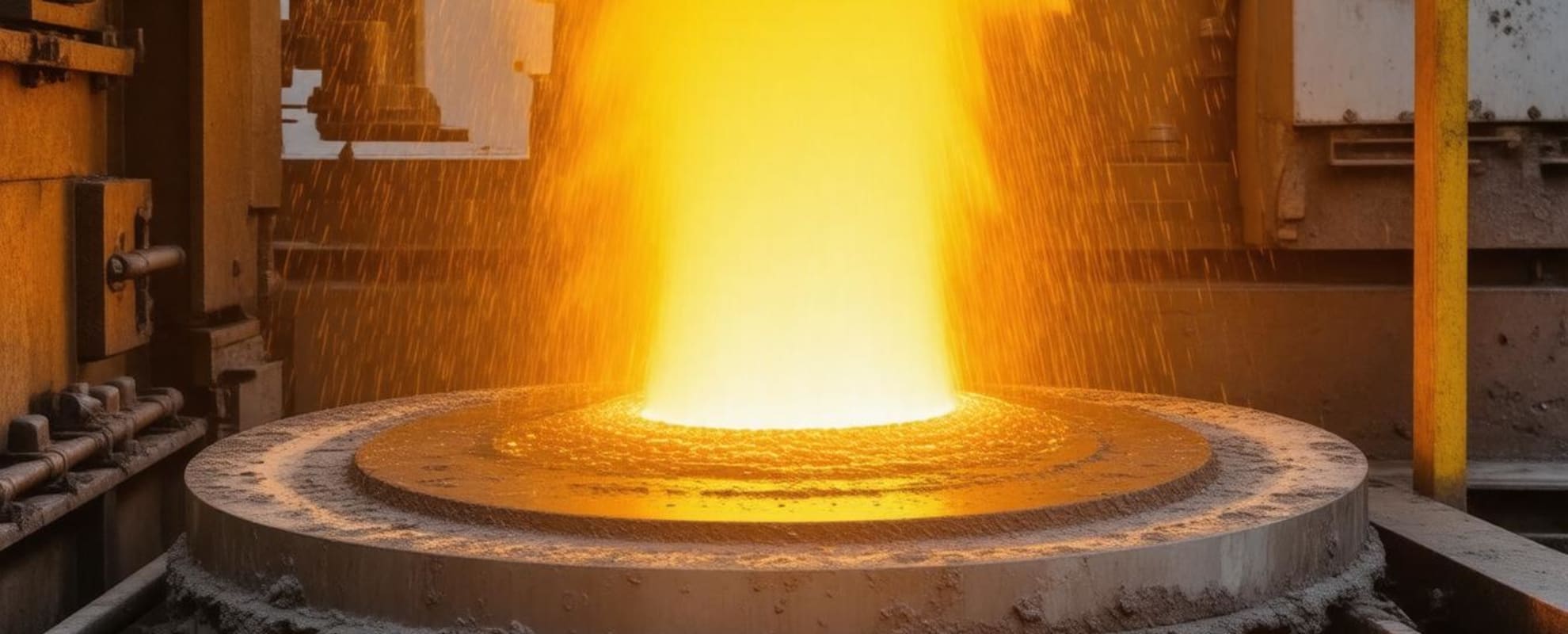
Heating gold to its boiling point is a specialist process. Equipment such as graphite or ceramic crucibles is needed to handle those extreme temperatures safely.
Operators also wear heat-resistant gloves and protective goggles to guard against burns and accidents. This is standard practice in any high-temperature metal process.
Converting gold to vapour requires reaching around 2,856 degrees Celsius. You cannot achieve this with everyday equipment.
The most common methods use high-energy lasers or electron beams. These generate intense heat almost instantly, boiling the gold very quickly. Companies in electronics manufacturing use these techniques to deposit thin gold films onto circuit boards and components.
Gold's boiling point is impressive - but how does it compare to other common metals?
| Metal | Melting Point | Boiling Point |
|---|---|---|
| Gold | 1,064°C | 2,856°C |
| Silver | 961.8°C | 2,162°C |
| Platinum | 1,768°C | 3,825°C |
| Copper | 1,085°C | 2,562°C |
| Iron | 1,538°C | 2,862°C |
Gold outperforms silver and copper in thermal endurance. Platinum sits above gold, which is why it's used in catalytic converters and lab equipment where even higher temperatures are involved.
Knowing these figures helps engineers choose the right metal for the job. It also helps manufacturers avoid damage during processes that involve melting or vaporising metals.
Gold's melting point of 1,064 degrees Celsius is where it moves from solid to liquid. At this stage, it can be shaped and moulded - which is how jewellery is cast and bars are formed.
Gold's boiling point of 2,856 degrees Celsius is where it moves from liquid to gas. This is relevant in more advanced manufacturing processes, such as plasma arc welding used in aerospace.
Research published in the Journal of Materials Science found that gold keeps its structural integrity better than most metals when exposed to prolonged high temperatures. Where other metals warp or degrade, gold holds its shape.
Gold exists in three states - solid, liquid, and gas - depending on temperature and pressure.
At room temperature, gold is solid. It has a density of 19.32 g/cm³, which is why it feels so heavy for its size. This solid form is what most of us recognise in coins, bars, and jewellery.
Heated to 1,064 degrees Celsius, gold becomes liquid. It can then be poured into moulds to create intricate shapes without losing its key properties.
At 2,856 degrees Celsius, gold becomes a gas. In this gaseous form, it can bond with surfaces at a microscopic level - a technique used in atomic layer deposition (ALD) to create ultra-thin layers in integrated circuits and high-performance electronics.
Gold's unique properties make it essential across a range of industries.
Electronics - Gold is used in connectors, switches, and circuit boards. It conducts electricity reliably and doesn't corrode, which makes it ideal for components that need to last. There's a good chance the device you're reading this on contains a small amount of gold.
Aerospace - Gold coatings protect spacecraft components from infrared radiation and the extreme conditions of space travel. Its thermal stability makes it one of very few materials suited to this role.
Medicine - Gold is biocompatible, meaning it can be used inside the human body safely. It appears in dental work, implants, and diagnostic equipment such as blood testing devices.
Chemical industry - Gold acts as a catalyst in certain chemical reactions. It speeds up the process without being changed itself, which makes it reliable and long-lasting in laboratory settings.
Research shows that gold's boiling point isn't completely fixed. When gold is mixed with other metals to form an alloy, its thermal properties can change. This is important for industries that rely on very specific temperature controls.
Gold's densely packed atomic structure is what gives it such resistance to heat. Denser materials tend to have higher melting and boiling points because their atomic bonds need more energy to break apart.
Understanding this helps engineers design better electronic components and manufacturing processes where heat resistance and electrical conductivity both matter.
A detailed guide exploring the strengths, risks, and roles of gold and silver in investment portfolios. Learn how each metal performs in uncertain economic times, how VAT affects your choices, and what historical and industrial trends mean for future value.
Precious metals, including gold are measured in Troy Ounces. There are 31.103 grams in a Troy Ounce of gold.
The gold element is one of the few elements on the periodic table with no definable individual being credited with the discovery.
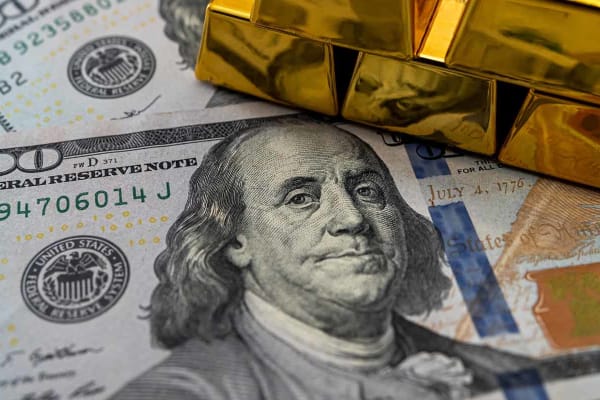
When the Coinage Act was passed in 1792, the American Dollar was backed by 24.75 grains of gold.