

Who Discovered The Element Gold?
The gold element is one of the few elements on the periodic table with no definable individual being credited with the discovery.
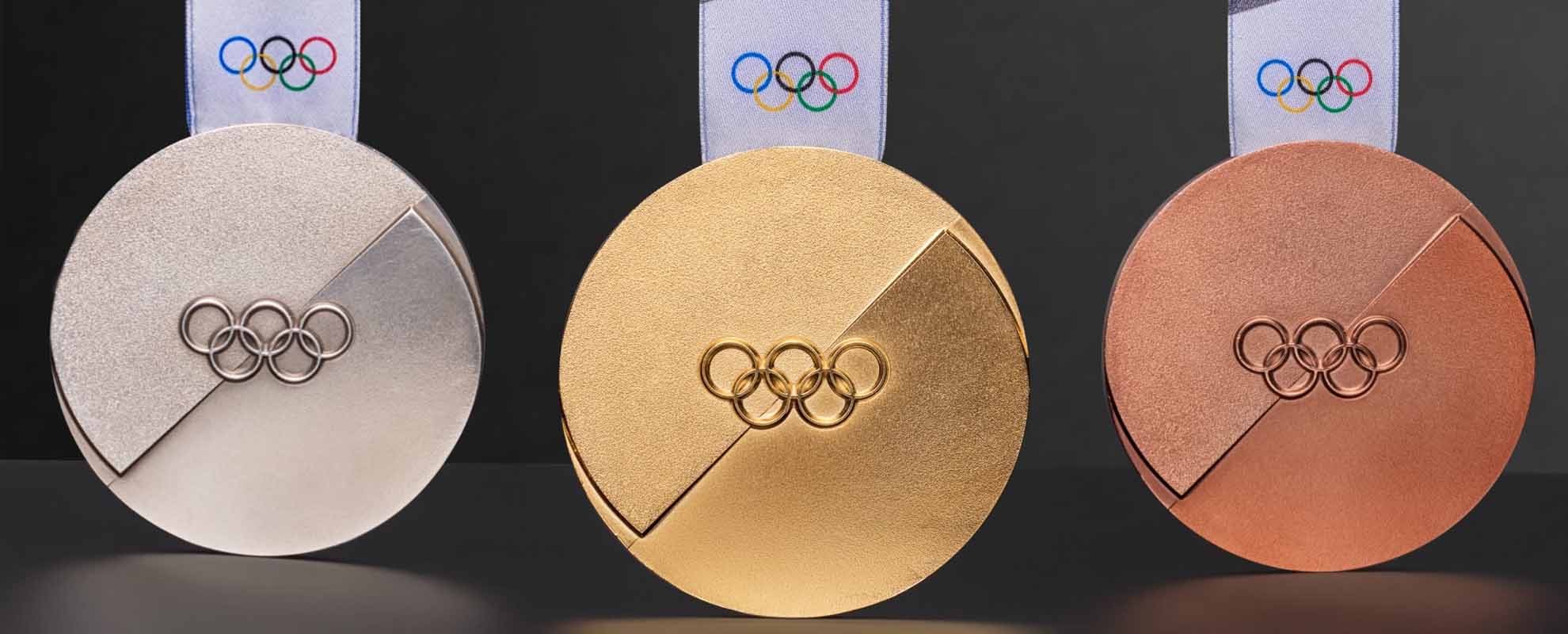
How much is an Olympic gold medal worth today? It's one of those questions that resurfaces every time the Games begin. The answer depends on whether you mean melt value, market value, or something far less tangible but arguably far more important.
With the 2026 Winter Olympic Games in Milan and Cortina d'Ampezzo in full swing, curiosity about medal value is entirely understandable. Let's start with the hard numbers, then move beyond them.
Despite the name, modern Olympic gold medals are not solid gold. They are primarily made from silver, with a minimum of 6 grams of gold plated over the surface.
Recent Olympic Games have moved from traditional .925 sterling silver to .999 fine silver for the core. That change slightly increases the intrinsic bullion value, particularly at a time when silver prices have strengthened considerably.
In simple terms, when you calculate how much an Olympic gold medal is worth today, you are valuing a large fine silver disc with a relatively small quantity of gold layered on top.
The gold portion is straightforward. At approximately 6 grams, its value today is £707.96.
The silver core carries most of the weight and therefore most of the intrinsic value. Official specifications for the Milano Cortina 2026 medals have not yet been published, but for context, the Beijing 2022 Winter Olympic silver medals weighed approximately 586 grams and were composed of 99.9% pure silver.
If we assume a comparable weight and purity for recent gold medals, the silver component alone would be worth approximately £1,062.17 at today's prices.
That figure often surprises people. Many expect a gold medal to contain tens of thousands of pounds worth of gold, but the reality is far more modest.
An Olympic silver medal is typically made entirely from fine silver. Using the Beijing 2022 specification as a benchmark, a 586 gram medal struck in .999 silver would have a current intrinsic value of £1,062.17 today.
The last Olympic Games to award solid gold medals was Stockholm in 1912. Since then, economic practicality has dictated the shift to silver cores with gold plating.
If a modern Olympic medal weighing over half a kilogram were struck entirely in pure gold, its intrinsic value would be extraordinary. At today's prices, it would sit at £69,144.20, a figure that would make each medal a financial asset in its own right.
Instead, organisers balance symbolism with sustainability. The medal must look and feel prestigious, but production must remain economically viable for host nations.
The 2026 Winter Olympic medals embrace a distinctly Italian design language. The concept centres on two halves forming one whole, symbolising unity, difference and perpetual motion.
A contrast between granular texture and mirrored surface creates visual energy, while Olympic and Paralympic values bind the two halves together. The medals were produced in partnership with the Istituto Poligrafico e Zecca dello Stato, combining technical precision with contemporary artistic simplicity.
While each Olympic cycle introduces new design elements, the underlying precious metal standards remain broadly consistent. That consistency allows us to estimate intrinsic value even before final specifications are formally released.
The melt value provides a baseline. It tells us what the gold and silver are worth if refined and sold purely as bullion.
But Olympic medals rarely trade at melt value. When medals appear at auction, they are sold as historic artefacts rather than scrap metal.
Medals linked to iconic athletes or record breaking performances have achieved prices in the tens or even hundreds of thousands of pounds. In those cases, the gold and silver content becomes almost irrelevant.
An Olympic medal represents far more than precious metal. It symbolises years of training, sacrifice, injury, resilience and, often, national expectation.
For the athlete, it may represent a lifetime goal achieved in a matter of seconds. For a country, it becomes part of a shared memory that transcends sport.
That emotional weight cannot be measured in grams or priced per ounce. It is intangible, yet arguably the most valuable component of all.
If we are speaking strictly in bullion terms, the answer is the combined value of approximately 6 grams of gold and over half a kilogram of fine silver, currently totalling £707.96 plus £1,062.17.
If we are speaking in historical or collectible terms, the figure could be exponentially higher. And if we are speaking in human terms, the value may be beyond calculation entirely.
That contrast, between measurable metal content and immeasurable meaning, is what makes the question so compelling. The bullion gives us a number. The achievement gives it significance.
Banner image credit: olympics.com
The gold element is one of the few elements on the periodic table with no definable individual being credited with the discovery.
Read about the history of the gold standard, its advantages and disadvantages.

Information about the California gold rush, when it started and who was president.