
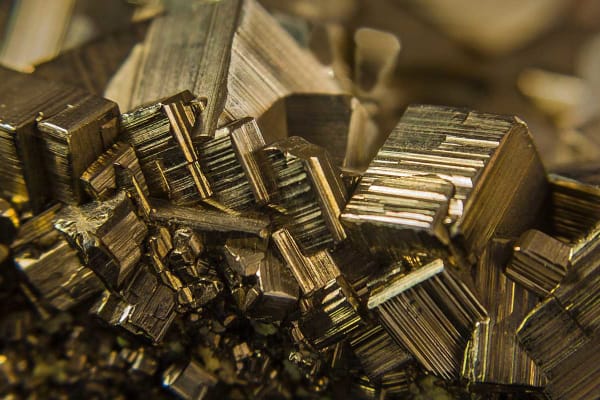
How To Tell Fools Gold From Real Gold
Learn how to tell the difference between Fool's Gold and real gold

We take a look at the history of Indian coins from the 5th century BC.
Historians believe that coins were introduced in India sometime around the 5th and 6th centuries BC to facilitate trade. The earliest coins were silver and punch-marked with various symbols of animals, plants, and humans.
Originating in the Hindu Kush, the coins of the Indo-Greek kings had bilingual writing. A Greek legend was generally on the front, and an Indian language (Prakhrit or Brami) was written on the back.
Gold coins were introduced during the Kushana Dynasty during the rule of Vima Kadphises. Used widely on the Silk Road trading routes, these coins suggest that early Kushans maintained Iranian religious beliefs, until later Kushan officials minted coins suggesting a Buddhist following.
The Gupta Dynasty produced a number of detailed gold coins. A portrait was on one side and the image of a deity was on the other. Some coins commemorated special events and had Brahmi script.
The Western and Central Indian Dynasties each had unique coins. The coins of the Kshatrapa are believed to be some of the earliest coins that bear dates. The legends are generally in Greek and Brahmi. The coins of the Satavahanas were minted from lead.
The imagery on Cholas coins is often intricate. Many of the coins bear the image of the symbolic tiger, while others are decorated with deities and royalty. The legends on these coins are in Sandskrit.
The Mughal rule in India brought Muslim design to the coins of India. Since Islam forbade the use of people and animals in artwork, most of the coins of the Mughal Dynasty are decorated with beautiful script.
Coins of the Maratha period display Persion writing. Often they modeled their coins on those of the Mughals.
The coins of the East India Company bear the early script from the Mughal mint and undergo constant changes that reflect the history of British India. They became the currency of the Indian trade.
The Princely States each issued their own coins under the Mughal rulers. The coins of Hyderabad were among the first to be machine struck.
The coins of the Independent Kingdoms tend to be unique. For example, the Kingdom of Ahom minted an coin with its weight borrowed from the coins of the Sultans of Bengal, but it was very original in its octagonal shape.
The coins of India reflect the nation’s rich history. Its diverse coins document the country’s invasions, triumphs, religious and political upheaval, and cultural turning points.
Learn how to tell the difference between Fool's Gold and real gold
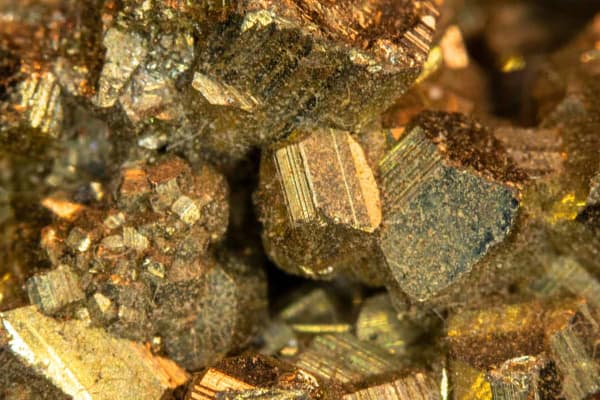
In the world of minerals, few can charm the untrained eye quite like Fool's Gold.

An average human body (weighing 70kg), contains a small amount of pure gold. Find out how much!