
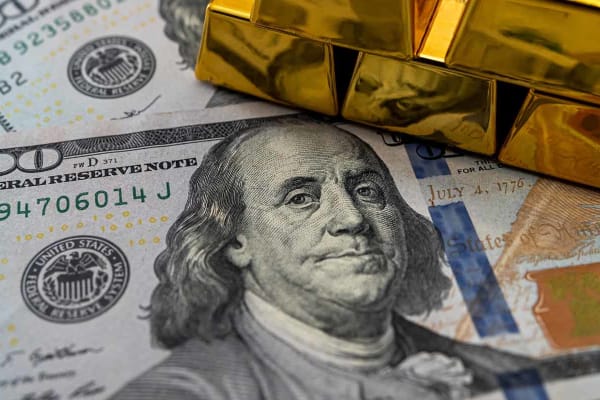
Does Gold Back the American Dollar?
When the Coinage Act was passed in 1792, the American Dollar was backed by 24.75 grains of gold.

Although many measurements from the beginning of the metric system have adapted to adjustments and changes, the Troy Ounce remains a standard measurement among those in the gold trade. When you hear or see descriptions of ounces in relation to gold, you can assume that it is the Troy Ounce and not a standard (Imperial) Ounce that is being used.
The Troy Ounce is used as a standard measurement that is shared among anyone that deals with the purchasing and manufacture of anything related to gold. The Troy Ounce is part of a larger measurement system for precious metals that is known as Troy weights. A regular Ounce is comprised of 28.35 grams. A Troy Ounce, however, is comprised of 31.1034807 grams. As you can see, there isn’t much of an overall difference between the two types of Ounces, but when it comes to gold weight, that extra 2 or 3 grams affects the size of the finished product. If you were to compare a piece of jewellery, like a ring, that weighed a standard Ounce and one that weighed a Troy Ounce the latter ring would be slightly bigger or thicker.
When the Coinage Act was passed in 1792, the American Dollar was backed by 24.75 grains of gold.

Gold has captivated humans for centuries, sparking dreams of wealth and adventure. From the ancient pyramids of Egypt to the rugged mountains of South America, the quest for this shiny metal has shaped civilisations and written history. But where did it all begin? As we explore significant historical mining sites, we uncover not only where gold was found but also how these discoveries transformed societies and economies, fueling ambition and igniting countless stories of success and struggle along the way.
Read about the history of the gold standard, its advantages and disadvantages.